 ultimate-guide
Average Cost to Replace an Asphalt Roof: 2026 Guide
Table of Contents
- Average Cost to Replace an Asphalt Roof in 2026
- What Drives Your Asphalt Roof Replacement Quote Up or Down
- The Cost of Roof Tear-Off and Disposal
- Hidden Damage and Structural Repairs That Blow the Budget
- Signs You Need a New Roof (And When You Don't)
- Roof Rejuvenation vs. Replacement: A Cost Comparison
- Financing, Insurance Claims, and Post-Installation Costs
- Frequently Asked Questions
Last Updated: September 29, 2026
Average Cost to Replace an Asphalt Roof in 2026
The average cost to replace an asphalt roof in 2026 typically lands between $8,500 and $20,000 for a standard single-family home, though that range widens fast once pitch, material grade, and tear-off enter the picture. Asphalt roof replacement pricing is a stack of line items: materials, labor, disposal, permits, and whatever the decking hides underneath.
National Pricing Benchmarks by Roof Size
Roof size is the single biggest multiplier. Contractors price asphalt roof replacement by the roofing square, which equals 100 square feet of roof surface.
| Roof Size | Squares | Typical Price Range |
|---|---|---|
| Small (1,200 sq ft) | 12-15 | $6,500 - $11,000 |
| Medium (2,000 sq ft) | 20-24 | $10,000 - $17,000 |
| Large (3,000 sq ft) | 30-34 | $15,000 - $26,000 |
Why Two Quotes for the Same Roof Can Differ by Thousands
Three variables explain most quote gaps: material grade, labor rate, and what the contractor includes in the base price. One bid may exclude tear-off, permits, and decking repair; another bundles everything. A low bid often means the disposal and permit line items are missing, and they reappear later as change orders.
What Drives Your Asphalt Roof Replacement Quote Up or Down
Four factors move the price most: roof pitch, material grade, the condition of the decking, and regional labor rates. Understanding each helps you spot padding in a bid.
Roof Pitch, Slope, and Complexity
A steep roof pitch slows every step of the job. Crews work more slowly, need fall protection, and use more staging. Valleys, hips, and multiple penetrations add cutting and flashing labor. A simple gable roof at a low slope is the cheapest geometry to replace; a cut-up roof with skylights and chimneys can add thousands in labor alone.
Material Grade: Three-Tab vs. Architectural Shingles
Three-tab shingles are the budget option, thinner and lighter, with a shorter service life. Architectural shingles cost more per square but last longer and resist wind better. Asphalt shingles dominate the market because they balance cost and durability, but the grade you pick changes the total by a meaningful margin.
The Cost of Roof Tear-Off and Disposal
The cost of roof tear-off and disposal usually adds $1,500 to $4,000 to a full replacement, and it is the line item homeowners most often overlook. Tear-off means stripping every old shingle down to the deck, then paying to haul it away. On a per-square basis, most contractors price tear-off at roughly $100 to $200 per roofing square, so a 24-square roof lands near the middle of that $1,500-$4,000 band before any decking work begins.
What Tear-Off Actually Involves
A standard tear-off runs in four stages:
- Tarping and protection. Crews cover landscaping, siding, and HVAC equipment before the first shingle moves.
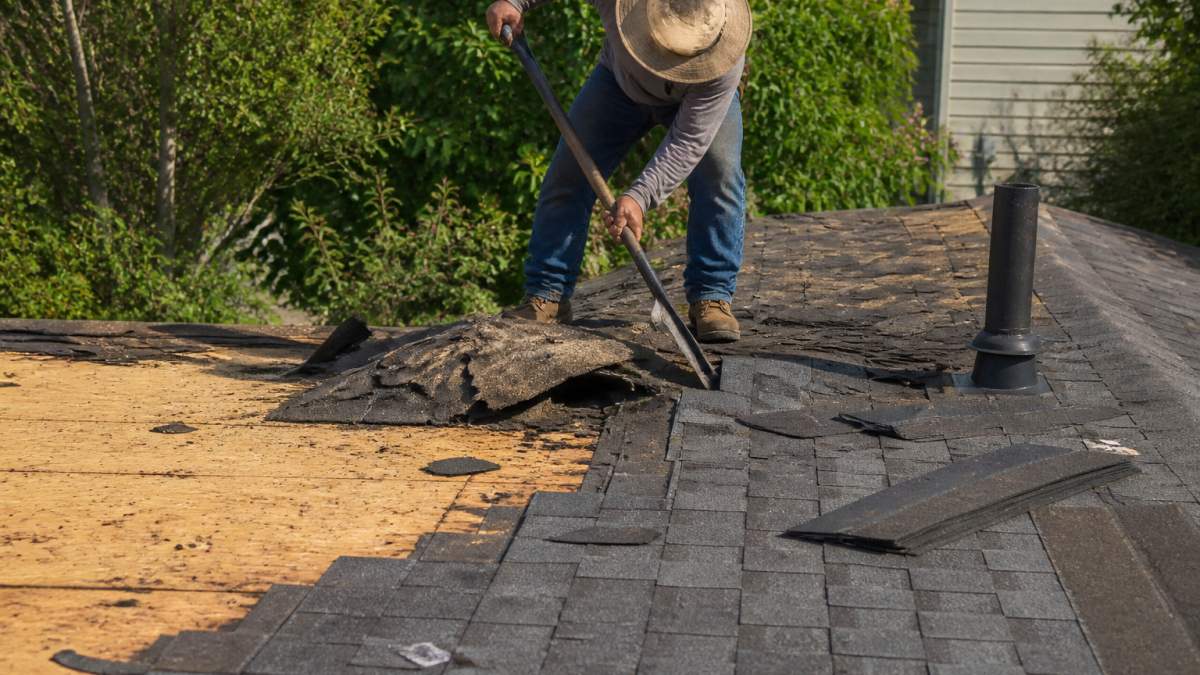
- Shingle removal. Flat bars and shovels strip courses down to the deck; nails are swept with magnetic rollers.
- Deck inspection. The now-exposed sheathing is checked for soft spots, delamination, and rot.
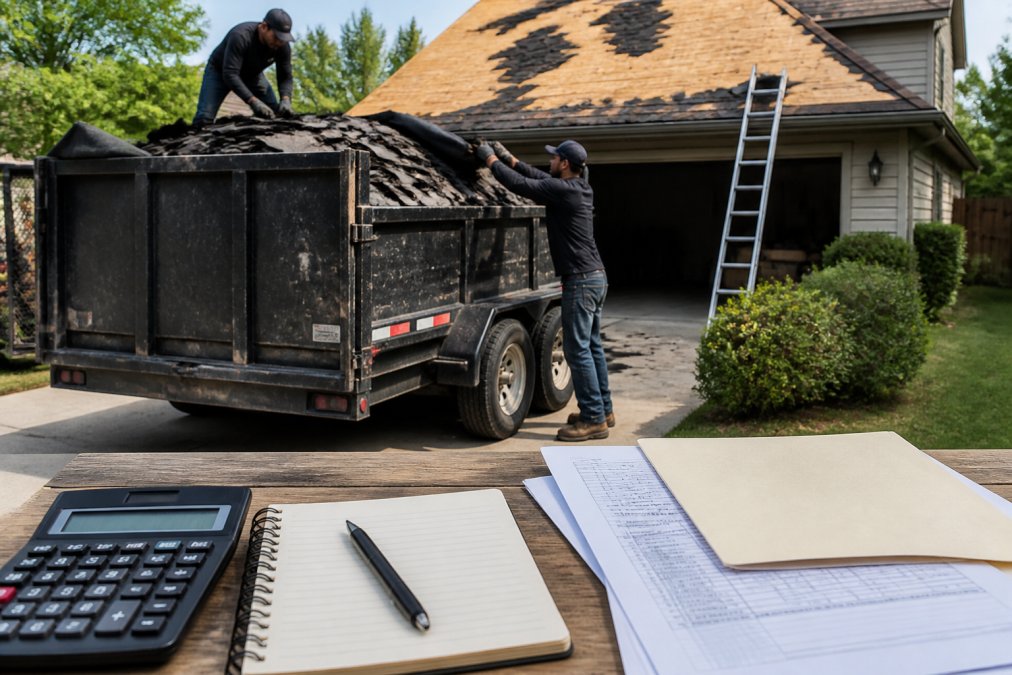
- Debris staging. Shingles are pitched into a dumpster or loaded into a truck-mounted debris trailer.
Each stage carries labor. A steep or cut-up roof slows removal, and multiple layers of old shingles multiply the work.
How Many Layers Are On Your Roof?
This is the single biggest tear-off variable, and it is the question most homeowners cannot answer. Building codes in most jurisdictions cap asphalt shingles at two layers, so a roof with two existing layers must be stripped to the deck before a third can go on. A second layer roughly doubles tear-off labor and debris weight.
| Existing Layers | Tear-Off Impact |
|---|---|
| One layer | Baseline labor and debris |
| Two layers | Roughly double the removal time and dumpster volume |
| Three or more | Often requires full deck replacement; verify local code limits |
Dumpster Rental, Disposal Fees, and Landfill Weight
Dumpster rental for shingle debris typically runs a few hundred dollars for a short-term drop, but the real cost driver is weight. Asphalt shingles are heavy, a single roofing square of torn-off shingles can weigh several hundred pounds, so a 24-square roof can generate multiple tons of debris. Disposal fees at the landfill are charged by the ton, which is why a two-layer tear-off can push disposal alone into four figures.
Permits and Inspection Fees
Permits vary by jurisdiction and often require an inspection. A typical residential roofing permit runs from under $100 in rural jurisdictions to several hundred dollars in larger metros, and some jurisdictions charge a separate re-inspection fee if the first inspection fails. Skipping the permit to save money is a mistake that surfaces at resale, when a buyer's inspector or title search flags unpermitted work.
Questions to Ask Before You Sign
- How many layers will you remove, and is that confirmed in writing?
- Is the dumpster or debris trailer included, or billed separately?
- Who pulls the permit, you or me?
- What happens if the deck needs repair once the shingles are off?
Getting those four answers in the bid protects you from the most common tear-off surprises.
Hidden Damage and Structural Repairs That Blow the Budget
Structural damage discovered under the shingles is the wildcard in every replacement. Once the old roof is off, the crew can see the roof decking, underlayment, and flashing in full. Soft or rotted decking must be replaced; ice and water shield and roofing felt may need upgrading; a failing drip edge or ventilation system adds cost.
Typical Repair Costs Once the Deck Is Exposed
| Hidden Item | Typical Added Cost |
|---|---|
| Decking replacement (per sheet of plywood or OSB) | Roughly $75-$150 installed per sheet |
| Rotted fascia or soffit repair | Priced per linear foot; varies widely by extent |
| Flashing replacement (chimney, valleys, penetrations) | Several hundred dollars per location |
| Ice and water shield upgrade | Priced per square; adds a modest premium over felt |
| Drip edge replacement | Priced per linear foot around the perimeter |
| Ventilation upgrade (ridge vent, intake vents) | Several hundred dollars for a typical roof |
These are the items that turn a $12,000 bid into a $16,000 invoice. The mechanism is simple: the contractor cannot see the deck until the shingles are off, so the bid is written on assumptions.
Why Decking Fails
Roof decking rots when water gets past the shingles and cannot dry. Common causes include:
- Failed flashing at chimneys, skylights, and sidewalls, which lets water track under the shingles.
- Poor attic ventilation, which traps moisture and cooks the underside of the sheathing.
- Ice dams in cold climates, which force meltwater back under the roof edge.
- Long-term granule loss, which thins the shingle and lets UV and water reach the felt.
How to Protect Yourself: The Contingency Line
A practical move is to ask the contractor to include a contingency line in the bid, a stated per-sheet price for decking replacement and a stated per-location price for flashing, agreed before work starts. That way, if the crew finds rot, you already know the price and there is no mid-job negotiation.
Red Flags in a Bid
- No mention of decking inspection or repair pricing.
- A price that is dramatically lower than every other bid, with no explanation of what is excluded.
- No written scope for flashing, drip edge, or ventilation.
- Pressure to sign before you have the contingency terms in hand.
A thorough pre-job inspection and a bid with stated hidden-repair pricing turn the biggest budget wildcard into a known number.
Signs You Need a New Roof (And When You Don't)
The signs you need a new roof are specific: widespread curling, granule loss that leaves bare spots, cracked or missing shingles across multiple slopes, and leaks that keep returning after patching. A single damaged area is a repair, not a replacement.
Roof Rejuvenation vs. Replacement: A Cost Comparison
Roof rejuvenation vs replacement comes down to roof condition and budget. Replacement is a full tear-off and rebuild; rejuvenation is a treatment that extends the life of shingles that are worn but not failing.
| Factor | Rejuvenation | Full Replacement |
|---|---|---|
| Cost | A fraction of replacement | Highest upfront cost |
| Timeline | One visit | Several days |
| Waste | Minimal | Tons of shingles to landfill |
| Best for | Sound but aging shingles | Widespread damage or leaks |
Financing, Insurance Claims, and Post-Installation Costs
Two costs homeowners forget: financing and what comes after installation. Many contractors offer payment plans, and insurance claims may cover part of a replacement if storm or hail damage is documented. Post-installation maintenance matters too. Clearing debris, checking flashing, and keeping gutters clean protect the installation warranty and the manufacturer warranty on your new shingles.
Frequently Asked Questions
How often should an asphalt roof be replaced?
Most asphalt shingle roofs last 15 to 25 years, depending on shingle grade and climate. Three-tab shingles typically reach the end of their life around 15 to 20 years, while architectural shingles often last 20 to 25. Heat, hail, and wind exposure shorten that window. If your roof is past 15 years and showing curling, granule loss, or repeated leaks, get a professional assessment before assuming replacement is the only option.
What is the most expensive part of replacing a roof?
Labor and tear-off usually eat the largest share of an asphalt roof replacement quote. Removing old shingles, disposing of them, and installing new underlayment, flashing, and drip edge takes more crew hours than laying the shingles themselves. Material grade matters too: architectural shingles cost more than three-tab, but the installation labor difference is often smaller than homeowners expect. Structural repairs found under the old roof can add the most unpredictable cost.
Is a full roof replacement always necessary for aging shingles?
No. Age alone does not condemn a roof. If the decking is sound, flashing is intact, and the shingles still have granules and flexibility, options like roof rejuvenation can extend service life several years at a fraction of replacement cost. A transparent inspection should tell you which category your roof falls into. Get an honest assessment before committing to a full tear-off.
How does roof pitch and complexity affect replacement quotes?
Steep slopes slow crews down and require extra safety equipment, so roofers charge more per square. Complex roofs with valleys, dormers, chimneys, and multiple penetrations take longer to flash and seal, adding labor hours. A simple gable roof on a low slope is the cheapest configuration to replace. Ask any contractor how they price pitch and complexity so you can compare quotes on equal terms.
What factors influence the total cost of a roof replacement?
Roof size, pitch, material grade, tear-off layers, decking condition, flashing work, ventilation upgrades, permits, and local labor rates all move the number. Disposal fees and dumpster rental add a fixed cost regardless of roof size. Two contractors quoting the same roof can land thousands apart because of what they include or exclude: underlayment type, ice and water shield, warranty terms, and whether they replace flashing or reuse it.
Is roof rejuvenation a real alternative to replacement?
For roofs with sound decking and shingles that still have life left, rejuvenation restores flexibility and color while improving weather resistance. It costs far less than a full tear-off and keeps shingles out of the landfill. It is not a fix for structural damage, missing shingles, or active leaks. The right choice depends on an honest inspection, not a sales pitch.