 How-to
How to Stop Granule Loss on Asphalt Shingles
Last Updated: October 23, 2026
Quick Summary
To stop granule loss on asphalt shingles, identify the cause, weather damage, installation defects, manufacturing issues, or normal aging, then address it with appropriate repairs, rejuvenation, or replacement. Proactive maintenance like cleaning gutters, improving attic ventilation, and gentle roof cleaning help prevent excessive loss and extend roof life.
- Most asphalt shingles last 20-25 years, with granule loss accelerating naturally after 15-20 years of age.
- Excessive granule loss appears suddenly with large bare patches and gutters filling with granules, unlike normal shedding which happens gradually.
- Never pressure wash asphalt shingles; use only soft-bristle brushes and low-pressure water to avoid blasting granules loose.
- Roof rejuvenation extends roof life by 5-10 years by restoring essential oils to aging shingles without full replacement.
- Call a professional if bald spots cover 20% or more of visible roof area or if your roof is over 18 years old with noticeable deterioration.
Table of Contents
- Understanding Granule Loss and Why It Matters
- Common Causes of Asphalt Shingle Granule Loss
- Signs of Excessive Granule Loss on Your Roof
- How to Inspect Your Roof for Granule Loss Safely
- How to Clean Asphalt Shingles Safely Without Causing Damage
- How to Repair Asphalt Shingles With Granule Loss
- Preventing Future Granule Loss: Maintenance and Protection
- Frequently Asked Questions
Understanding Granule Loss and Why It Matters
Shingle granules are tiny mineral particles embedded in the surface of asphalt shingles. They protect the underlying asphalt from UV rays, heat, and weather damage, and to stop granule loss is essential to maintaining your roof's integrity. Without them, your roof ages rapidly and becomes vulnerable to leaks and deterioration.
What shingle granules do and why they matter
Granules serve three functions: they reflect UV radiation, provide weather resistance, and add weight and durability to the shingle structure.
Lose the granules and the asphalt hardens, becomes brittle, cracks, and lets water in, so the roof fails faster.
Normal shedding versus excessive loss
Some granule loss is normal.
Excessive loss happens suddenly or over a short period, with large bare patches and gutters filling with granules, a problem needing attention.
Normal aging happens gradually over years; excessive loss happens in months or weeks. If you notice a sudden change, don't wait.
Common Causes of Asphalt Shingle Granule Loss
Granule loss rarely has a single cause. Most roofs shed granules because two or three factors overlap, sun, storm history, attic heat, and installation quality. The useful question is which cause is most likely here, and who to call.
Weather-related damage and UV exposure
Heat is the primary enemy of asphalt shingles. Intense sun breaks down the binding agents holding granules in place, compounding over years.
Heavy rain and hail cause physical damage: water gets under granules and loosens them, hail knocks them loose instantly, and wind tears them away.
Installation defects and manufacturing issues
Poor installation can cause premature granule loss. Shingles installed too tightly, overdriven with nails, or misaligned build up stress and shed granules faster.
Manufacturing defects are rarer but serious: a batch with weak granule adhesion separates prematurely. The tell is a roof only a few years old losing granules rapidly and evenly across many shingles, not just in high-sun or storm-hit areas.
A diagnostic framework: installation, manufacturing, or aging?
Use this decision tree to narrow down the likely cause before you call anyone:
- How old is the roof? Under 5 years with rapid, widespread loss points toward installation or manufacturing. Over 15 years with gradual loss points toward normal aging.
- Is the loss even or concentrated? Even loss across many slopes and orientations suggests a manufacturing or ventilation issue. Loss concentrated on sun-facing or storm-facing slopes suggests weather and aging.
- Did it follow a dated event? Loss that began within days or weeks of a hail, wind, or rain event points to storm damage, document it with photos and dates.
- Are other homes in the neighborhood affected? If neighbors with roofs installed around the same time show similar loss, a manufacturing or installation pattern is more likely.
- Are there installation red flags? Overdriven nails, uneven shingle lines, or poor ridge and soffit ventilation visible from the ground support an installation-defect theory.
Roof age and expected shingle lifespan
Most asphalt shingles last 20-25 years. After 15-20 years, granule loss accelerates naturally as binding agents weaken. On an 18-20 year old roof, expect granule loss, normal aging, not necessarily imminent failure, but the roof is entering its final years of reliable performance.
Roof age is the biggest predictor of granule loss: a 25-year-old roof sheds much faster than a 10-year-old one.
Signs of Excessive Granule Loss on Your Roof
Spotting warning signs early lets you act before serious damage occurs, a handful of granules is not the same as a gutter full of them.
Visible bald spots and bare areas on shingles
Bald spots are shingles with large areas of exposed asphalt showing through. They look darker than surrounding granule-covered areas, with smooth, bare asphalt.
Bald spots often appear first on the highest, most sun-exposed areas, so check upper south-facing slopes first. Note the size and number, a few isolated spots on an older roof differ from large, connected bare areas on a newer one.
Granules collecting in gutters and downspouts
Granules in gutters are the easiest sign to check without climbing, but the amount matters more than the presence. Here is how to read what you find:
- A light scattering of granules after a heavy rain on a roof of any age is normal. New roofs shed loose particles during installation and the first year; older roofs shed gradually.
- A visible layer coating the gutter bottom after a storm suggests a shedding event. Check whether it followed a dated hail or wind storm, if so, photograph it and note the date for insurance purposes.
- Gutters repeatedly filling with granules across multiple cleanings points to ongoing, excessive loss rather than a one-time event. Track it: clean the gutters, note the date, and check again in a few months.
Granules look like coarse sand or mineral particles, usually dark gray or brown. After heavy rain, walk your home's perimeter and check gutter lines and the ground below downspout outlets. Photograph heavy accumulations and note the date, a simple log turns a vague worry into useful evidence.
How to Inspect Your Roof for Granule Loss Safely
Roof inspections require caution. Falls are serious. Use this ground-level approach first before considering climbing.
Ground-level inspection checklist
Start from the ground. Use binoculars to examine shingles from a safe distance. Look for these signs:
- Large bare patches or bald spots on shingles
- Color variations (faded areas next to darker areas)
- Shingles that appear thin or worn compared to others
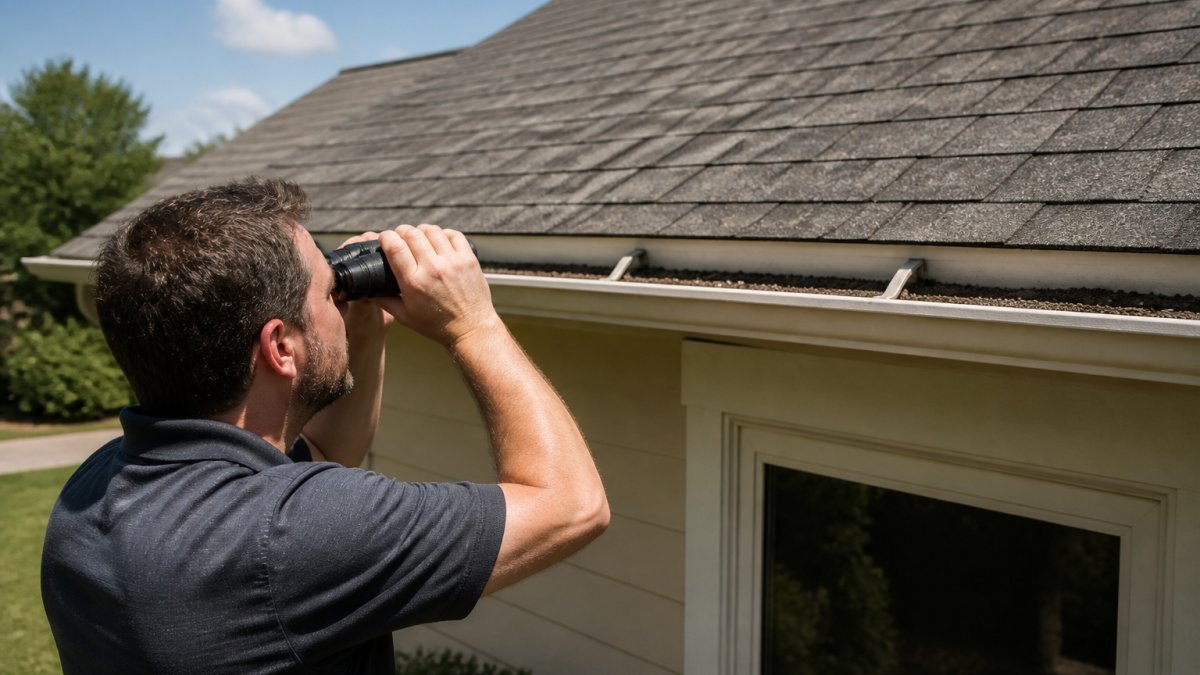
Walk the entire perimeter, spending extra time on south- and west-facing slopes, which get the most sun. Photograph concerning areas to help professionals assess the situation.
When to call a roofing professional
Call a professional if you see:
- Large bald spots covering 20% or more of visible roof area
- Widespread granule loss across multiple roof sections
- Shingles curling or lifting significantly
Professionals can safely access your roof and determine whether you need repair, rejuvenation, or replacement.
How to Clean Asphalt Shingles Safely Without Causing Damage
Cleaning removes dirt and debris but must be done carefully. Aggressive cleaning damages granules and accelerates deterioration.
Gentle cleaning methods that preserve granules
Use a soft-bristle brush or low-pressure rinse. Water alone, applied gently, removes most surface dirt.
A mixture of water and mild dish soap works well for stubborn stains. Apply with a soft brush.
Oxygen-based roof cleaners are gentler than chlorine-based products. Follow manufacturer directions carefully and always rinse completely.
What to avoid: pressure washing and harsh chemicals
Never pressure wash asphalt shingles. High-pressure water blasts granules loose and damages the shingle surface.
Avoid harsh chemicals like bleach or strong cleaners. These break down the asphalt binder and accelerate granule loss.
Don't use wire brushes or abrasive scrubbing tools. These physically remove granules.
How to Repair Asphalt Shingles With Granule Loss
Repair options depend on the severity and extent of damage. Understanding your choices helps you make the right decision.
Repair options by severity and durability
For minor damage (one or two shingles), spot repair is effective: a roofer replaces them with matching ones at minimal cost. Durability depends on the age of surrounding shingles, which may fail soon after.
For moderate damage (5-10 shingles), multiple spot repairs extend roof life by 2-3 years at a reasonable cost compared to full replacement.
For extensive damage (more than 10 shingles or large areas), repair becomes less practical. The underlying roof structure may be compromised. Full replacement or rejuvenation becomes the better option.
Spot repairs versus full shingle replacement
Spot repairs address immediate problem areas. They're fast and affordable. However, they only fix visible damage. The underlying roof continues aging.
Full shingle replacement restarts the clock with a new 20-25 year lifespan.
For roofs between 15-20 years old with isolated damage, spot repair buys time.
Roof rejuvenation as a preventive solution
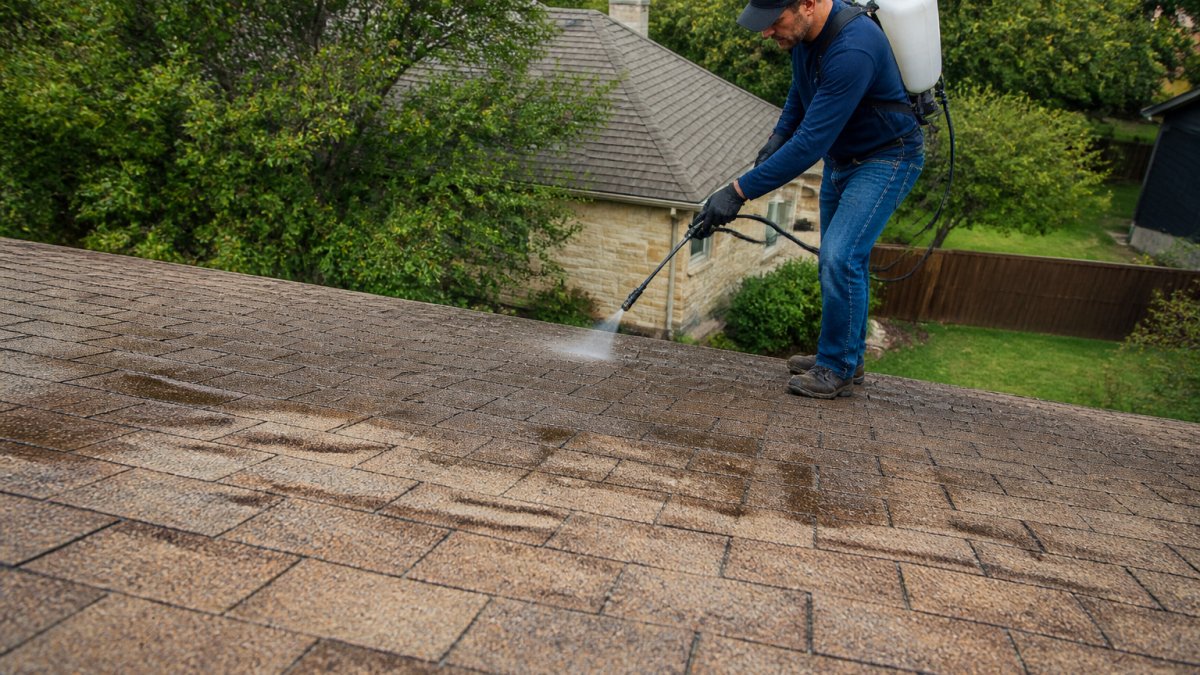
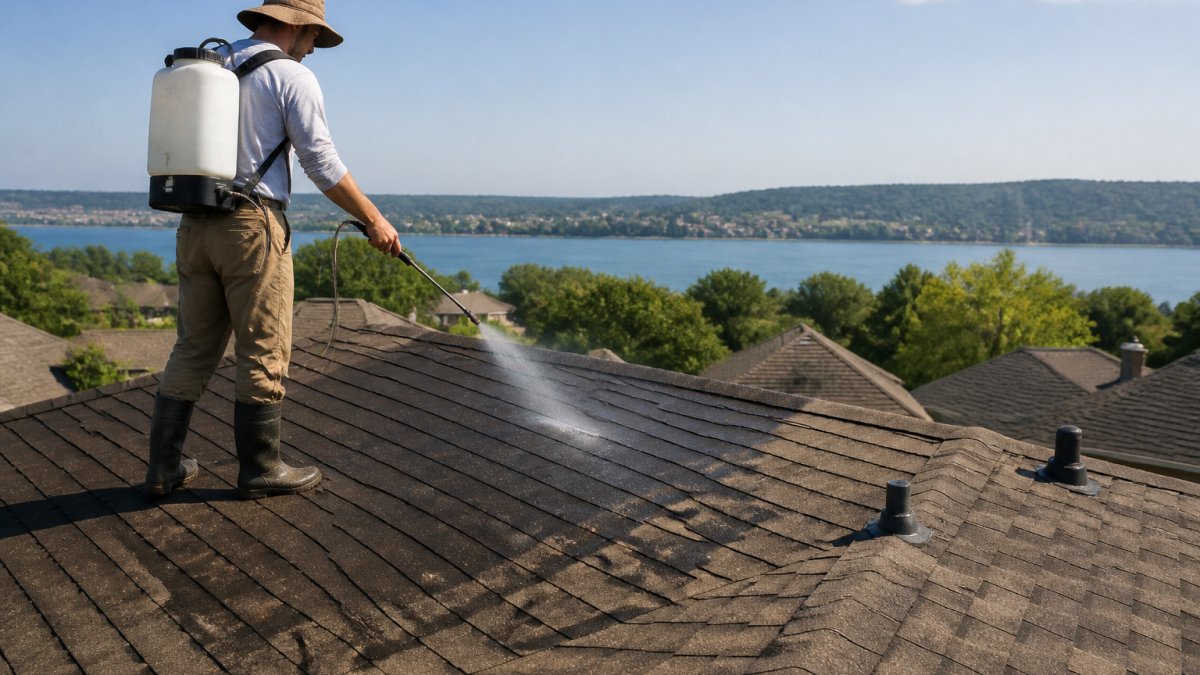
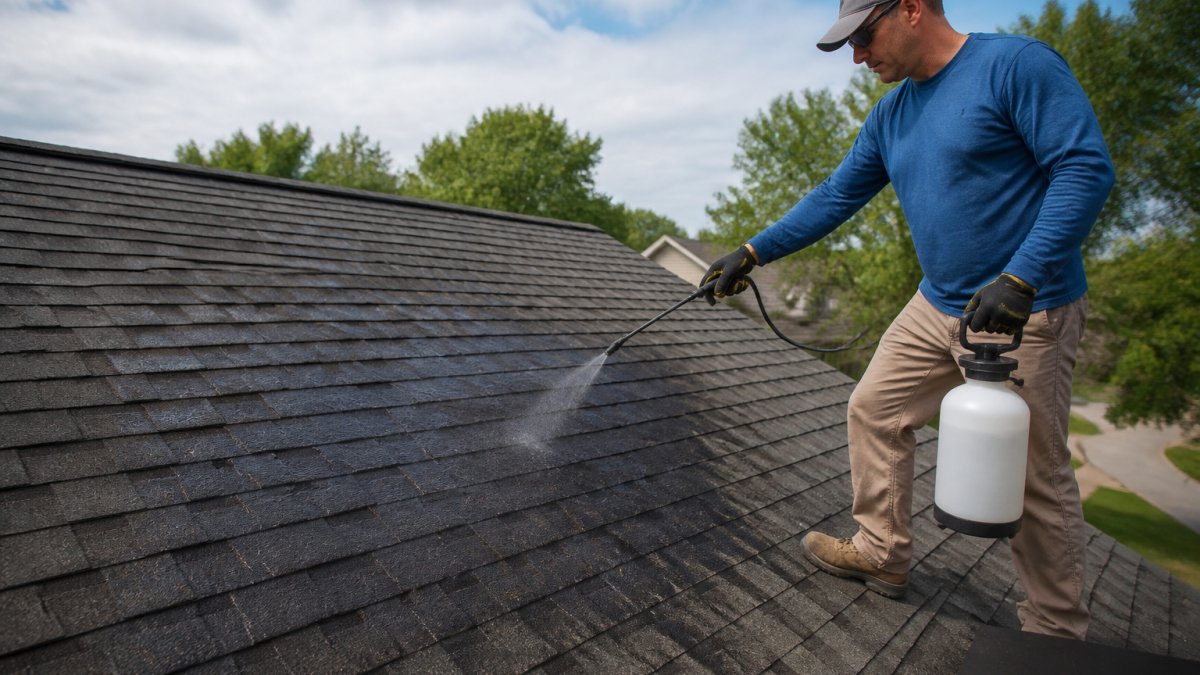
Roof rejuvenation restores essential oils to aging asphalt shingles, improving flexibility, restoring color, and enhancing weather resistance.
At ATX RENEWED ROOFS, we use plant-based rejuvenation spray designed specifically for asphalt shingles.
Rejuvenation works best on roofs showing age but without extensive damage. It helps stop granule loss from accelerating.
Preventing Future Granule Loss: Maintenance and Protection
Proactive maintenance prevents problems before they start. Smart practices extend roof life significantly.
Roof maintenance best practices
Clean gutters twice yearly, clogged gutters trap moisture against shingles and accelerate deterioration.
Trim overhanging tree branches: they scratch shingles, hold moisture, and drop leaves that clog gutters.
Address leaks immediately. Water damage spreads quickly. Small leaks become major problems within months.
Remove moss and algae growth. These trap moisture and accelerate deterioration.
Improving ventilation and reducing heat stress
Proper attic ventilation is critical. Heat buildup accelerates granule loss.
Add ventilation if your attic runs hot.
Consider reflective roof coatings if your roof gets intense sun exposure.
Granule loss signals that your roof is aging.
At ATX RENEWED ROOFS, we help Austin homeowners make smart decisions about aging roofs.
Frequently Asked Questions
Is granule loss on asphalt shingles normal?
Yes, some granule shedding is normal as asphalt shingles age. New shingles shed loose granules during the first year or two. However, excessive or premature granule loss before your roof reaches 10-15 years old signals a problem. If you notice large bald patches, bare areas, or heavy granule accumulation in gutters on a relatively young roof, that indicates accelerated wear from weather damage, poor installation, or a manufacturing defect.
What causes excessive granule loss on asphalt shingles?
Several factors cause premature granule loss. Severe weather like hail, heavy rain, and extreme heat accelerates deterioration. UV exposure and intense sun exposure break down the adhesive binding granules to the shingle surface. Poor ventilation traps heat, causing shingles to become brittle. Improper installation or manufacturing defects can also result in granules separating prematurely. Pressure washing and harsh chemicals remove granules directly, so gentle cleaning methods are essential.
How can roof rejuvenation treatment help stop granule loss?
Roof rejuvenation treatments, such as plant-based spray solutions, restore essential oils to aging asphalt shingles, improving their flexibility and weather resistance. By restoring the shingle's protective layer and reducing brittleness, these treatments can slow future granule loss and extend your roof's lifespan by several years. This preventive approach is most effective when applied before granule loss becomes severe, helping you avoid the high cost and environmental waste of full roof replacement.
When should I worry about granule loss and call a roofing professional?
Contact a roofing professional if you notice bald spots covering more than 10-15% of your roof, heavy granule accumulation in gutters that continues month after month, or if your roof is under 10 years old and showing significant loss. A professional inspection can determine whether the loss is normal aging, storm damage, or an installation defect. Early intervention can save you thousands in replacement costs and help you decide whether repair, rejuvenation, or replacement is the best option.