 Ultimate guide
7 Facts on Roof Rejuvenation and Pet Safety
Quick Summary
Roof rejuvenation safe for pets is generally a yes once the spray has fully cured, but the details matter. Keep pets indoors during application, confirm dry and full-cure times with your provider, and read the product's safety data sheet before work begins.
- Ask for the product's safety data sheet, which lists ingredients and VOC content.
- Keep pets indoors with windows closed and HVAC on recirculate during spraying.
- Get the expected dry time and full-cure time in writing before pets go outside.
- Keep water bowls and pet dishes out of the drip line for the first rainfall.
- Watch for drooling, vomiting or lethargy in pets and call a veterinarian if seen.
Table of Contents
- Roof Rejuvenation Safe for Pets: What the Evidence Shows
- What Roof Rejuvenation Sprays Actually Contain
- How Roof Rejuvenation Works on Asphalt Shingles
- Is Roof Rejuvenation Safe for Pets? Reading the Safety Data Sheet
- Post-Application Safety Steps for Pets and Runoff
- Roof Rejuvenation vs Roof Replacement Cost
- How Long Does Roof Rejuvenation Last and What Customers Report
- Roof Maxx Complaints and How to Vet Any Provider
- Book a Free Estimate Before Your Pets Go Outside Again
- Frequently Asked Questions
Roof Rejuvenation Safe for Pets: What the Evidence Shows
Last Updated: November 15, 2026
Is roof rejuvenation safe for pets? For most homeowners with a dog or cat, the short answer is yes once the spray has fully cured, but the details matter. ATX Renewed Roofs uses a plant-based rejuvenation spray, and we believe Austin homeowners deserve a clear, honest look at what goes on their roof and what it means for the animals that walk their yard. Most of the confusion comes from the word "non-toxic," which is a marketing term rather than a regulatory one. Read the product's safety data sheet, ask what the wet-to-dry window looks like, and keep pets off treated surfaces until the product has set.
What Roof Rejuvenation Sprays Actually Contain
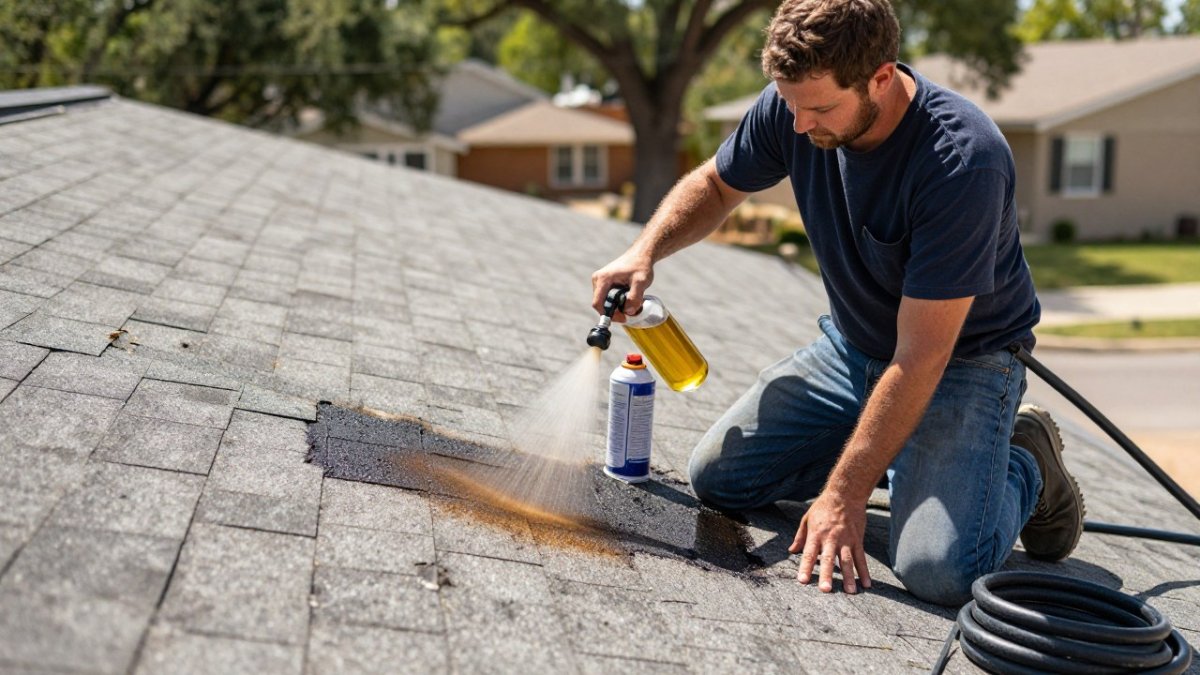
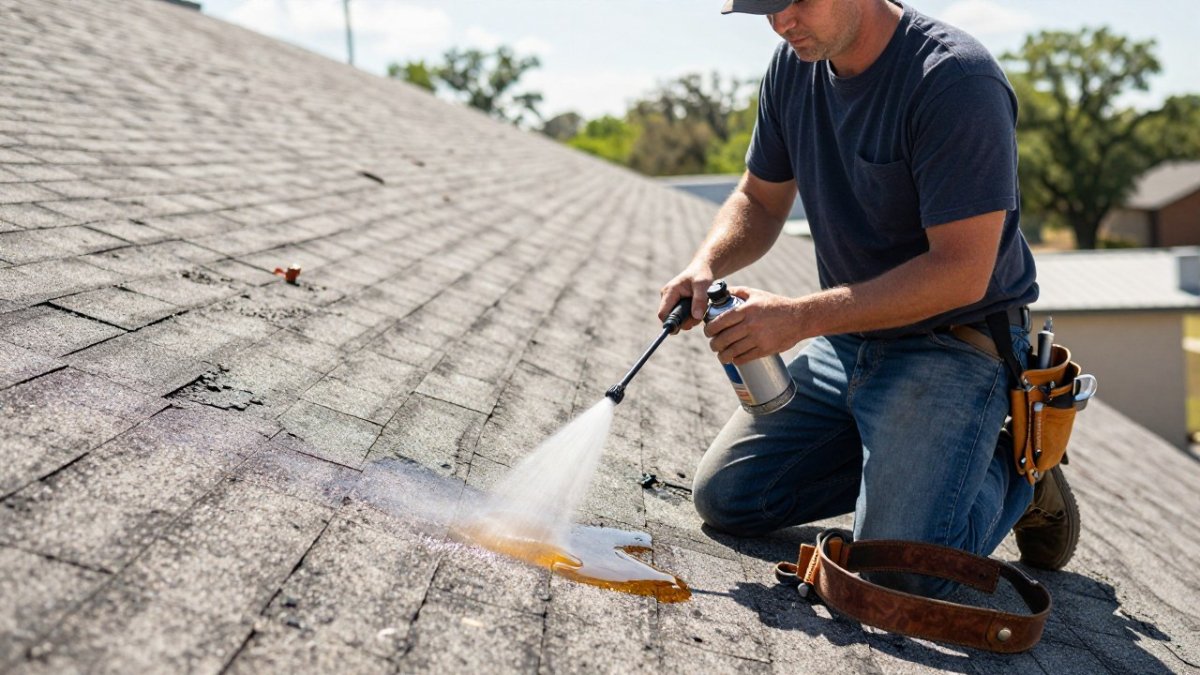
Roof rejuvenation sprays are generally formulated to add back the oils and flexibility that asphalt shingles lose over time. The active ingredients differ by manufacturer, and the composition is what determines the safety profile. Plant-based formulas typically rely on oils derived from soybean or similar sources, while other products use petroleum-derived carriers. Before any spray goes on your roof, ask for the specific product name and its safety data sheet, which lists ingredients, volatile organic compound (VOC) content, and handling precautions. A product that cannot produce that document is one to avoid.
How Roof Rejuvenation Works on Asphalt Shingles
Asphalt shingles lose flexibility as their oils oxidize under sun exposure. Over 15 to 20 years, that oxidation leads to brittleness, curling, and granule loss. A rejuvenation spray penetrates the shingle surface and replenishes some of those lost oils, which can restore flexibility and slow further cracking. It does not rebuild a failing roof. If your shingles are already badly curled or missing large areas of granules, a spray may not restore enough protection to justify the cost, and an honest assessment should say so.
Is Roof Rejuvenation Safe for Pets? Reading the Safety Data Sheet
The safety data sheet is the most reliable place to start, but most homeowners do not know what to look for on one. Safety data sheets for workplace chemicals are generally organized into standardized sections. The sections that matter most for pet owners are typically the hazard identification, composition and ingredient disclosure, exposure controls, and physical properties sections, including flash point and VOC content.
Rejuvenation sprays vary in their ingredients, and the SDS tells you which type of formula you are dealing with.
Pets are more sensitive to airborne chemicals than people, and dogs in particular will lick their paws and fur after walking across treated areas. For that reason, the important question is not only whether the product is safe once dry, but whether it stays off surfaces pets can reach while it cures.
Watch out: an SDS is not a guarantee of pet safety. It is written for workplace handlers, not for animals, and it will not tell you how long to keep a dog off a lawn. Use it to screen products, then get the dry-time and runoff guidance from the provider in writing.
What the Application Timeline Means for Pets
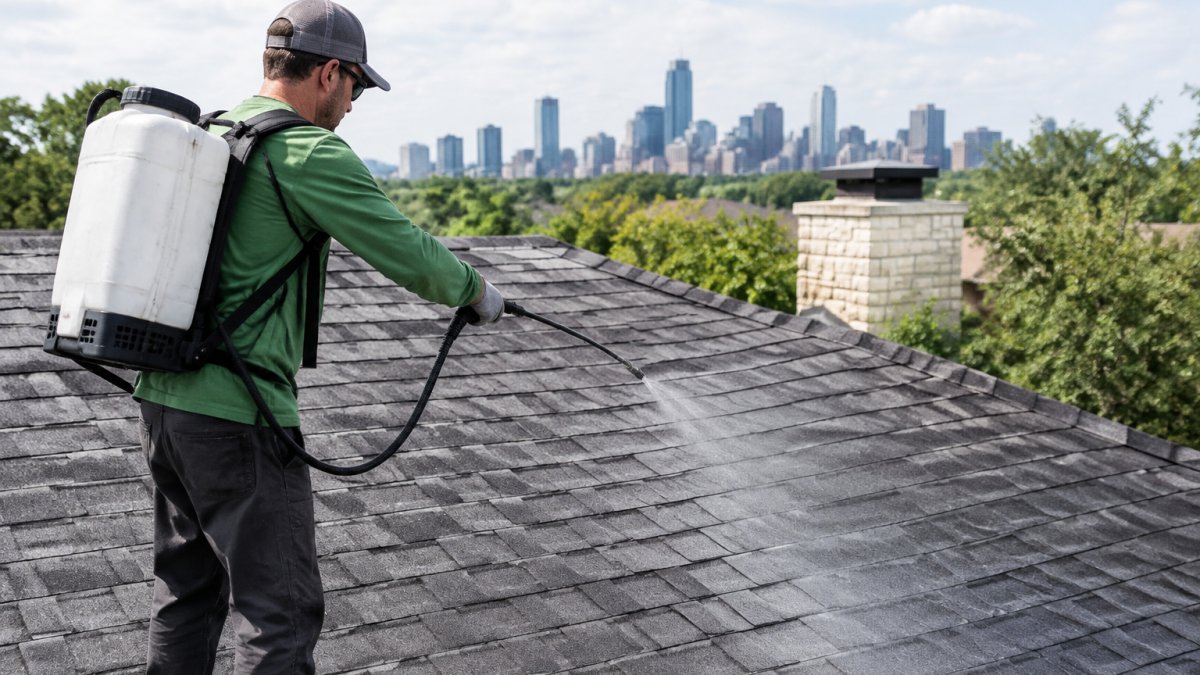
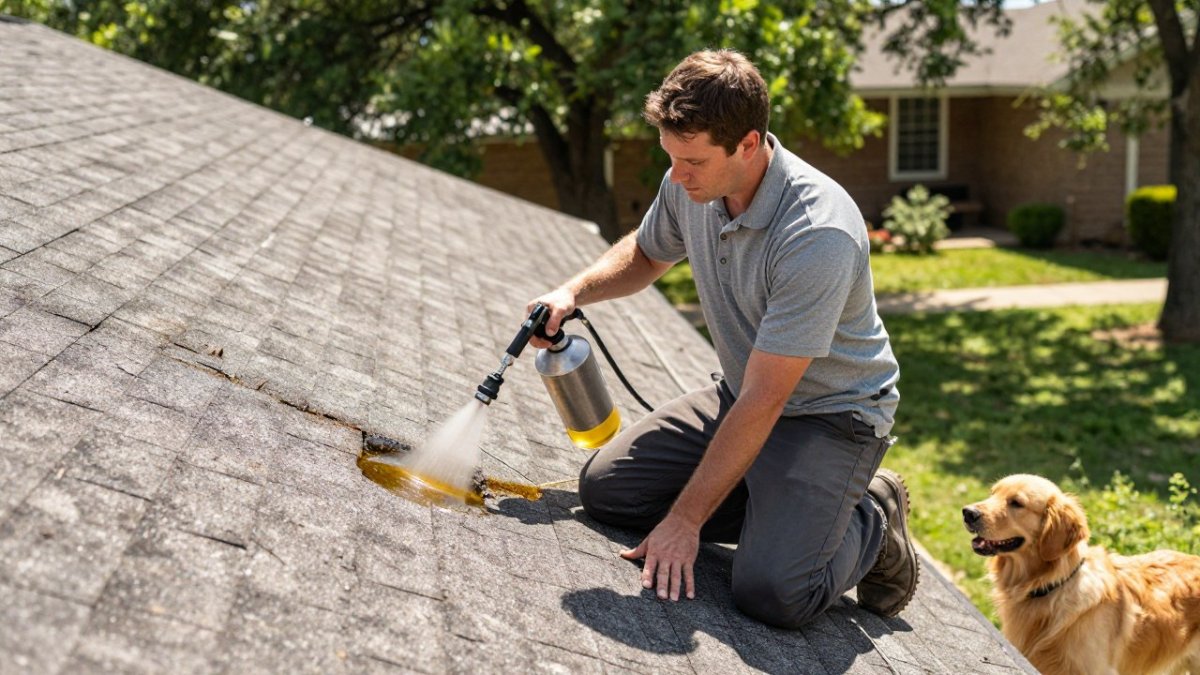
Application is the window of greatest exposure. During spraying and the first hours of curing, keep pets indoors with windows closed and HVAC set to recirculate if your system allows it. Ask your provider when pets can safely return to the yard once the spray has dried, since a short waiting period gives the surface time to set fully. Ask your provider for the expected dry time under local summer heat and rain patterns, since both affect how quickly the product cures.
Post-Application Safety Steps for Pets and Runoff
Most articles stop at 'keep pets away until dry.' A more useful guide gives you a timeline and a runoff plan, because those are the two things pet owners actually worry about after the crew leaves.
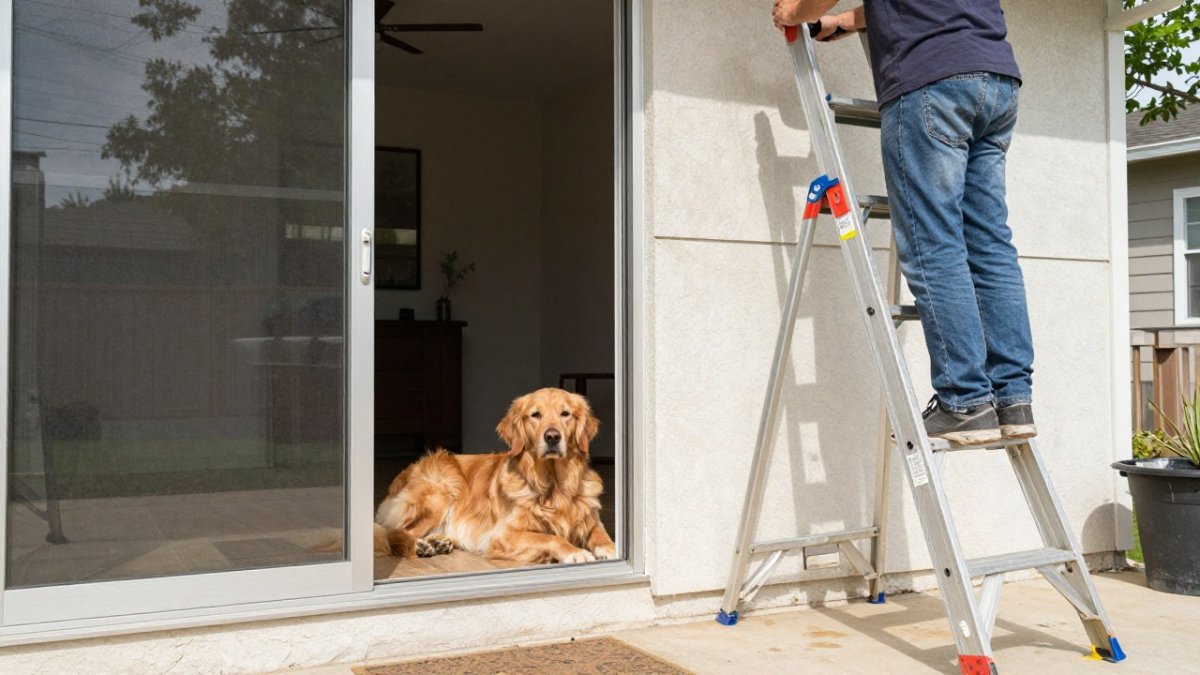
The waiting-period guide. Dry time depends on temperature, humidity, and sun exposure, so ask your provider for the expected dry and full-cure times for your roof. Ask your provider to write the expected dry time and full-cure time on your estimate, and treat the full-cure time as the earliest point for unrestricted pet access. Until then, keep these steps in place:
- Remove pets from the property during spraying and keep them indoors until the surface is dry.
- Ask the provider to confirm the product's dry time and full-cure time before you let animals back outside.
- Rinse outdoor water bowls, toys, and any items that were left in the drip zone.
- Check that gutters and downspouts drain away from pet water sources and garden beds.
- Watch for pets licking or chewing treated areas during the first few days, and contact a veterinarian if you see unusual drooling, vomiting, or lethargy.
Runoff and the drip line. Rain can carry residue from the roof surface into the drip line, which is where pets often drink and dig. Confirm the product's runoff profile with your provider, and keep water bowls and pet dishes out of the drip line for the first rainfall after treatment. If your downspouts empty onto a lawn or garden bed where pets spend time, consider a temporary redirect or a rinse of that area after the first rain. A low-VOC, plant-based product reduces the concern but does not eliminate the need to manage the first rain event.
Watch out: 'non-toxic' on a brochure is a marketing term, not a regulatory one. The waiting period and the runoff plan are what actually protect your pets, so get both in writing before the crew arrives.
Use this summary to see the key waiting-period and runoff steps at a glance.
| Step | What to do | Timing |
|---|---|---|
| Keep pets indoors | Remove pets from the property during spraying | Until the surface is dry |
| Confirm dry time | Ask the provider for dry and full-cure times | Before pets go outside |
| Clear water sources | Rinse bowls, toys and items left in the drip zone | After application |
| Check drainage | Make sure gutters and downspouts drain away from pet water and beds | Before pets return |
| Watch for licking | Look for drooling, vomiting or lethargy and call a vet | First few days |
| Manage the drip line | Keep pet bowls out of the drip line for the first rain | First rainfall after treatment |
Roof Rejuvenation vs Roof Replacement Cost
Replacement is generally the more expensive path, and many homeowners consider rejuvenation for that reason. Pricing depends on roof size, pitch, and the condition of the shingles, so the most useful next step is a written estimate for your specific roof. Current pricing is available on our website, and a free estimate will show you whether rejuvenation makes sense for your home or whether replacement is the better investment.
How Long Does Roof Rejuvenation Last and What Customers Report
Results vary with the roof's age, the climate, and how much deterioration was present at treatment. Results depend on your roof's starting condition, and no spray is permanent. Ask any provider for their written timeline and what they consider a realistic result for a roof like yours.
Roof Maxx Complaints and How to Vet Any Provider
When you evaluate any provider, ask for the warranty terms in writing, what they cover, and what they exclude. Ask for the safety data sheet, the dry-time guidance, and a clear explanation of when a roof is too far gone for treatment. A provider who gives you a direct answer on those points is easier to trust than one who promises results without documentation.
Book a Free Estimate Before Your Pets Go Outside Again
If your roof is showing wear and your pets spend time in the yard, the safest next step is a free estimate that covers the product's safety data, the application timeline, and a realistic look at whether your roof can be restored. At ATX Renewed Roofs, we aim to give transparent, no-pressure assessments. Get a free estimate today and get a straight answer before anything goes on your roof.
Frequently Asked Questions
Is roof rejuvenation safe for pets once the spray has dried?
The safety data sheet is the document to read before the crew arrives. Ask the provider for the SDS, confirm the stated dry time, and keep dogs and cats indoors until that window passes. Rinse pet water bowls and wipe paw-accessible surfaces if you are unsure. Treat the dry-time guidance as the minimum, not a guarantee.
How long does roof rejuvenation last compared with a replacement roof?
Many homeowners see several additional years of service from a rejuvenated asphalt shingle roof, though results depend on the shingle's condition, granule loss, and local heat exposure. A full replacement typically lasts the full rated life of new shingles. Pricing for either option depends on roof size, pitch, and materials, so request a written quote from ATX Renewed Roofs at the brand's website to compare your specific numbers.
Should I be concerned about runoff from roof rejuvenation into my yard?
Runoff concerns are reasonable, especially if pets drink from rain gutters or use the lawn near downspouts. Ask the provider how the product behaves during rain and whether it is applied in dry conditions. Keep pets away from areas where runoff pools for the first rainfall after treatment, and check that the product's SDS addresses environmental fate. Local rules and the product label should guide your decisions.