 how-to
How to Fix Curling Roof Shingles: A Homeowner's Guide
Table of Contents
- What Causes Shingles to Curl and Claw
- Signs Your Shingles Need Repair
- Tools and Materials You'll Need
- How to Fix Curling Roof Shingles: Step-by-Step
- Understanding Roof Shingle Rejuvenation as an Alternative
- Temporary vs. Permanent Fixes for Curling Shingles
- Extending Asphalt Shingle Lifespan and Preventing Future Curling
- Cost of Roof Repair vs. Replacement: When to Call a Professional
- Frequently Asked Questions
Last Updated: October 2, 2026
What Causes Shingles to Curl and Claw
Asphalt shingles curl primarily due to thermal expansion, repeated heating and cooling in your attic causes edges and corners to lift.
Moisture trapped by poor ventilation causes uneven swelling and shrinkage, creating curl. Granule loss accelerates the problem by exposing asphalt to UV damage.
After 15 years, essential oils break down, making shingles brittle and prone to curling. Extreme heat, wind, and freeze-thaw cycles accelerate this degradation.
Signs Your Shingles Need Repair
Catch curling early before water infiltration damages your roof structure. Look for these warning signs:
- Visible curling or clawing at shingle edges and corners
- Buckling or rippling across the roof surface
- Missing or loose granules creating bare spots
- Blistering on shingle surfaces (small raised bubbles)
- Cracked or split shingles along the grain
- Water stains on your attic ceiling or interior walls
- Daylight visible through roof boards in the attic
Early detection improves repair success; severe damage requires replacement. A 20-minute attic inspection reveals problems before they spread.
Tools and Materials You'll Need
Tools and materials vary by shingle type; wrong adhesives or techniques can void warranties or cause permanent damage.
Essential tools (all shingle types):
- Ladder (extension ladder for multi-story homes)
- Hammer or roofing nailer
- Putty knife or flat pry bar
- Work gloves and safety glasses
- Roof harness or safety rope (strongly recommended)
- Caulking gun
Materials vary by shingle type:
For asphalt shingles: Use elastomeric roofing cement rated for your climate.
For composite or architectural shingles: Use polyurethane-based adhesive instead of asphalt cement.
For wood shingles: Use wood-compatible sealant or linseed oil-based product only. Avoid roofing cement (traps moisture) and heat guns (cause splitting).
Critical materials to avoid:
- Silicone caulk or general-purpose sealant (poor adhesion, fails in 6-12 months)
- Tar-based products on composite shingles (can stain and degrade the material)
- Roofing cement on wood shingles (traps moisture and causes rot)
- Undersized or mismatched nails (won't hold properly and can tear shingles)
How to Fix Curling Roof Shingles: Step-by-Step
Step 1: Inspect and Assess the Damage
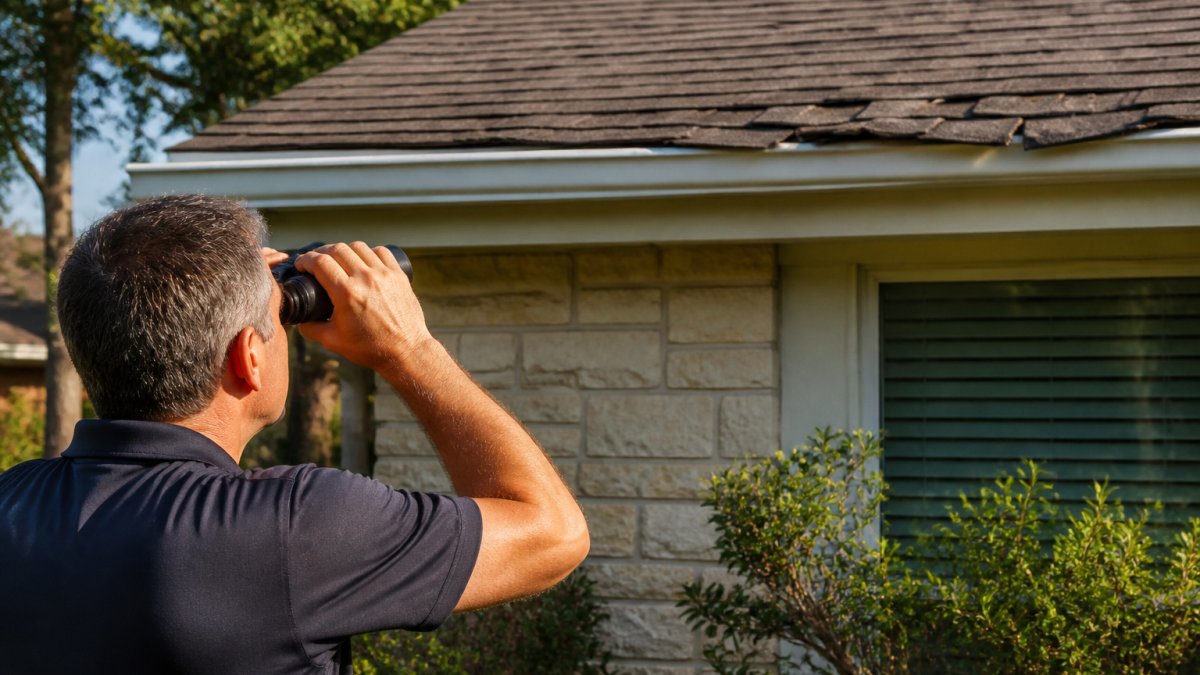
From the ground, identify curled shingles and their severity. Check your attic for water stains, if present, professional assessment may be needed. Take photos for reference and insurance documentation.
Step 2: Prepare the Shingles
Climb safely using a ladder stabilizer and harness. Warm the curled shingle with a heat gun (6-8 inches away, 30-60 seconds) or work on a warm afternoon. Gently press edges down; don't force. If it resists, apply more heat.
Step 3: Apply Roofing Cement
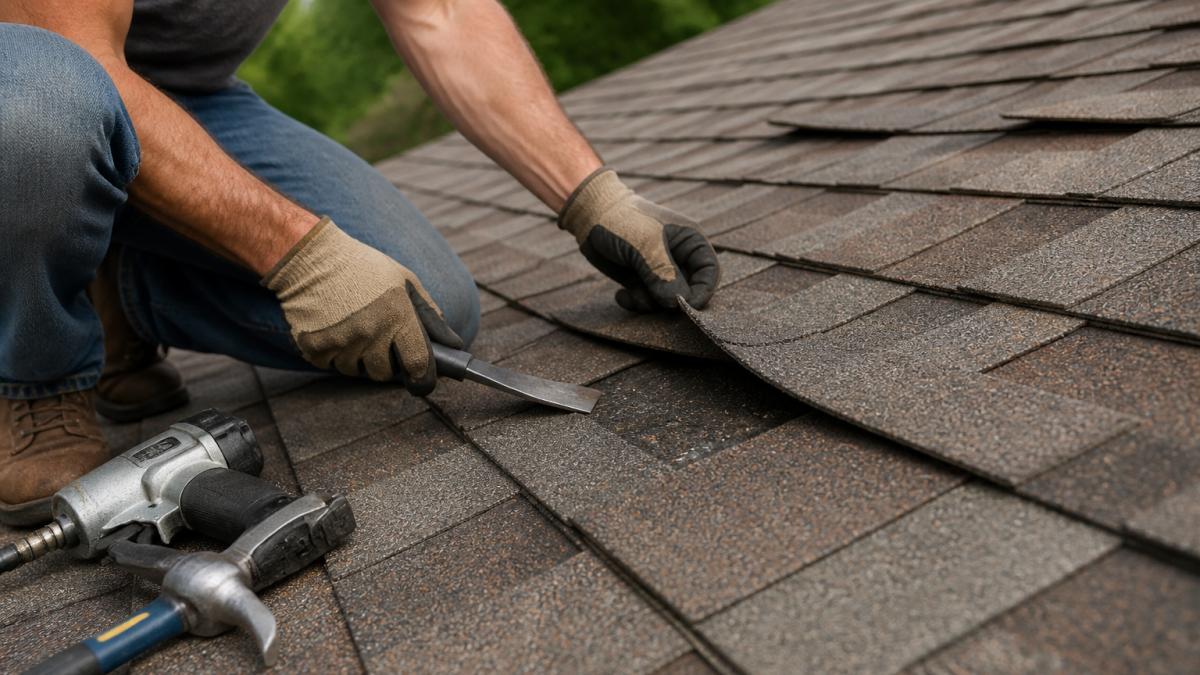
Apply roofing cement (pencil-sized bead) under lifted tabs. Press shingle down firmly for 30-60 seconds. Wipe away excess with a putty knife, thin bond lines prevent moisture trapping.
Step 4: Secure the Shingles
If the shingle has pulled away from its fasteners, you may need to renail it.
Place nails in the factory nail holes if they're still visible.
Drive nails straight in, angled nails can tear the shingle. Use just enough force to seat the nail flush with the shingle surface.
Apply a small dab of roofing cement over each nail head. This seals the hole and prevents water from entering around the fastener.
Understanding Roof Shingle Rejuvenation as an Alternative
Rejuvenation offers a different approach to extending asphalt shingle lifespan. This process involves applying a plant-based spray that restores essential oils to aging shingles.
The rejuvenation process doesn't fix curling directly, it prevents curling from worsening by restoring shingle health.
Benefits of rejuvenation include:
- Restores original color and appearance
- Improves flexibility and reduces brittleness
- Enhances weather resistance
- Extends the lifespan of existing roofs
- Costs significantly less than full replacement
- Reduces roofing waste in landfills
ATX RENEWED ROOFS specializes in this approach.
Rejuvenation works best as a preventive measure. If your shingles are already severely curled or damaged, repair or replacement is more appropriate.
Temporary vs. Permanent Fixes for Curling Shingles
Temporary fixes slow damage but don't solve the underlying problem. Roofing cement and nails stop immediate leaks and flatten curled shingles. This repair typically lasts 2-5 years, depending on weather and the severity of curling.
Temporary fixes are appropriate when:
- You're on a tight budget
- Your roof is 10-15 years old (still has some life left)
- Curling is mild to moderate
- You plan to replace the roof in the next 5 years
Permanent fixes address the root cause and last much longer. Full roof replacement is the only truly permanent solution. A new roof with proper ventilation and modern materials can last 25+ years.
Permanent fixes are necessary when:
- Curling is severe across large roof areas
- Water damage is visible in your attic
- Multiple shingles are cracked, split, or missing
- Your roof is 20+ years old
- You plan to stay in your home long-term
The decision between temporary and permanent depends on your roof's age, the extent of damage, and your budget. A professional inspection helps clarify which approach makes sense for your situation.
Extending Asphalt Shingle Lifespan and Preventing Future Curling
Insulation matters too. Adequate attic insulation prevents heat transfer from living spaces into the attic.
Keep gutters clean and ensure proper drainage. Standing water on the roof accelerates deterioration.
Trim tree branches that hang over your roof. Shade keeps shingles cooler, but falling branches and debris damage them.
Apply roof shingle rejuvenation once your roof reaches 10 years old. This restores essential oils and extends lifespan significantly.
Avoid walking on your roof unnecessarily. Foot traffic accelerates granule loss and can crack shingles.
Cost of Roof Repair vs. Replacement: When to Call a Professional
However, cost alone should not drive your decision. Warranty implications are a critical factor most homeowners overlook.
How DIY repairs affect your warranty:
Most asphalt shingle manufacturers offer 15-25 year warranties that cover defects in materials and workmanship. However, these warranties typically require that installation and repairs be performed by a licensed, certified contractor.
Manufacturer warranties usually cover:
- Defects in shingle material (granule loss, cracking due to manufacturing defects)
- Leaks caused by shingle failure (not installation or maintenance issues)
- Replacement or repair costs if the shingle fails prematurely
What voids the warranty:
- Repairs performed by non-certified individuals (including homeowners)
- Use of non-approved adhesives or fasteners
- Improper installation or repair techniques
- Walking on the roof unnecessarily (accelerates granule loss)
- Failure to maintain proper attic ventilation
The cost-benefit analysis:
Consider these factors:
- Roof age and warranty status: Roofs under 10 years old with active manufacturer warranties should be repaired by a licensed contractor to preserve coverage. Roofs over 15 years old are typically out of warranty, so DIY repair carries less risk. Roofs over 20 years are candidates for replacement regardless.
- Damage extent: Curling on a few shingles warrants repair. Widespread curling across 30%+ of the roof suggests replacement.
- Water damage: If water has infiltrated your attic, repair alone won't solve the problem. Professional assessment is essential.
- Your timeline: If you plan to sell soon, replacement adds more value than repair and provides a fresh warranty for the buyer.
- Budget constraints: Repair buys time if replacement isn't affordable now, but factor in the warranty risk.
- Comfort with heights and risk: DIY roof work carries injury risk. If you're uncomfortable working at heights, the cost of professional service is worth the safety benefit.
Rough cost comparison:
| Scenario | DIY Repair | Professional Repair | Full Replacement |
|---|---|---|---|
| Materials/labor | $50-150 | $200-500 | $5,000-15,000 |
| Time investment | 2-4 hours | Same-day service | 1-3 days |
| Warranty impact | Likely voids coverage | Preserves warranty | New 15-25 year warranty |
| Longevity | 2-5 years | 3-7 years | 20-25 years |
| Best for | Mild curling, roof 15+ years old | Moderate damage, roof under 15 years | Severe damage, roof 20+ years old |
Call a professional when:
- Your roof is under 15 years old and still under manufacturer warranty
- Damage is extensive or widespread (affecting more than a few shingles)
- You see signs of water infiltration in your attic (stains, soft spots, mold)
- Your roof is nearing the end of its expected lifespan (18+ years for asphalt)
- You're uncomfortable working at heights or lack experience with roofing
- You need an honest assessment of repair vs. replacement
Many roofers offer free estimates, so getting a second opinion is reasonable if you're uncertain.
Frequently Asked Questions
Can curled shingles be repaired, or do they always need replacement?
Curled shingles can often be repaired if caught early, before they crack or lose granules. Minor curling responds well to roofing cement and weighted pressure applied to flatten the tabs back down. However, severely curled, cracked, or blistered shingles that have lost significant granules may be beyond repair and require replacement. A professional roof inspection can determine whether your specific shingles are salvageable or if replacement is necessary.
What causes roof shingles to curl in the first place?
Shingles curl due to thermal expansion from heat exposure, moisture trapped in the attic causing cupping from beneath, loss of essential oils that keep asphalt flexible, and age-related weathering. Inadequate attic ventilation accelerates curling by trapping hot, humid air. Asphalt shingles naturally lose flexibility as they age, and direct sun exposure hardens the material, causing the edges to lift and curl upward or inward.
How long does a roof shingle rejuvenation treatment last compared to traditional repair?
Roof shingle rejuvenation restores essential oils to aging asphalt shingles, improving flexibility and extending roof life. Traditional repairs using roofing cement address immediate curling but don't restore the underlying material. Rejuvenation offers a longer-lasting solution for moderately aged roofs, while severely damaged shingles may still require replacement. Visit ATX Renewed Roofs for a free estimate to assess whether rejuvenation suits your roof's condition.
When should I call a professional instead of attempting DIY repair?
Call a professional if your roof is steeply pitched, you're uncomfortable working at heights, shingles cover more than 30% of the roof, there are signs of structural damage or water infiltration, or if curling is accompanied by missing shingles, blistering, or significant granule loss. Professional contractors can safely assess whether repair, rejuvenation, or replacement is warranted and ensure work meets manufacturer warranty requirements. A free roof inspection helps determine the best course of action for your specific situation.
Curling shingles don't have to mean an expensive roof replacement. For roofs showing early to moderate wear, repair and rejuvenation extend lifespan significantly while keeping costs down. ATX RENEWED ROOFS offers plant-based roof rejuvenation that restores your aging asphalt shingles' flexibility, color, and weather resistance, giving you years more protection without the waste and expense of full replacement. Get a free estimate today and discover how we can help your roof last longer.