 blog
Roof Rejuvenation vs Chemical Cleaning: Which Restores Shingles
Last Updated: November 19, 2026
Quick Summary
Roof rejuvenation is a spray treatment that restores flexibility to aging asphalt shingles, while chemical cleaning removes algae, moss, and stains from the roof surface. Cleaning changes how a roof looks, and rejuvenation changes how long it lasts, so a stained but sound roof needs cleaning and a brittle, curling roof needs rejuvenation.
- Rejuvenation is generally considered most relevant to roofs roughly 15 to 20 years old, where shingles are aging but not failing.
- Soft washing uses low pressure because pressure washing asphalt shingles can strip granules and may affect manufacturer warranties.
- Rejuvenation is not formulated for metal or tile roofs; those roofs get cleaning only.
- Widespread granule loss, exposed fiberglass, active leaks, or soft decking mean replacement, not treatment.
- Chemical cleaning is typically repeated every few years as growth returns, so the cost recurs.
Table of Contents
- Roof Rejuvenation vs Chemical Cleaning: Two Different Jobs
- How Each Method Works on Asphalt Shingles, Metal, and Tile
- Is Roof Rejuvenation Worth It for a 15- to 20-Year-Old Roof?
- Roof Maxx Complaints and What They Reveal About the Category
- Asphalt Shingle Rejuvenation Cost and What Drives the Price
- A Decision Framework Based on Roof Condition, Age, and Damage
- Warranty, Insurance, and Manufacturer Guidance to Check First
- Get a Free Roof Assessment Before You Choose a Treatment
- Frequently Asked Questions
Roof Rejuvenation vs Chemical Cleaning: Two Different Jobs
Roof rejuvenation is a spray treatment that restores flexibility to aging asphalt shingles, while chemical cleaning removes algae, moss, and stains from the roof surface. They solve different problems, and confusing the two leads homeowners to buy the wrong service.
Here is the core distinction most guides skip: cleaning changes how a roof looks, and rejuvenation changes how long it lasts. A stained roof that is otherwise sound needs cleaning. A dull, brittle roof with curling shingles needs something else entirely.
Below, we compare both methods side by side, explain the chemistry and application behind each, and give you a decision framework based on roof condition, age, and visible damage.
What chemical cleaning removes
Chemical cleaning targets organic growth. Algae, moss, lichen, and the dark streaks they leave behind are living organisms feeding on shingle surfaces.
The most common culprit is gloeocapsa magma, a blue-green algae that spreads across asphalt shingles in humid climates. It shows up as dark streaking, usually starting on the north-facing slope where moisture lingers.
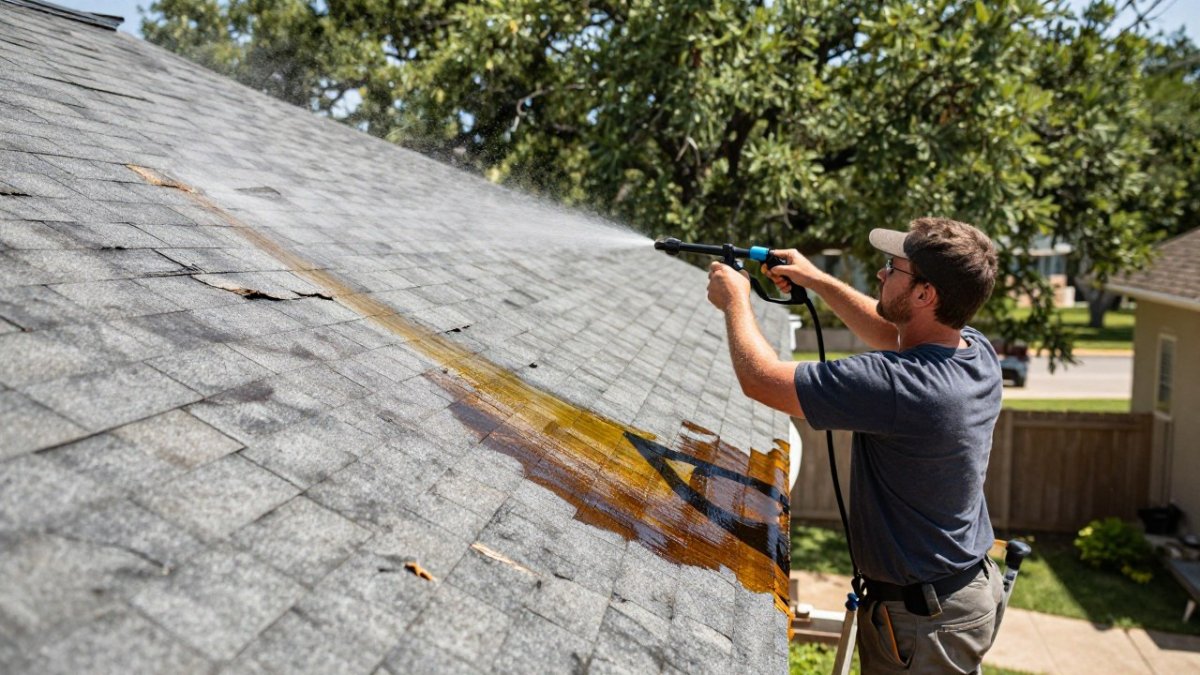
A chemical treatment kills that growth and lifts the stains. What it does not do is restore shingle flexibility or replace lost granules. Cleaning is cosmetic and preventive, not structural.
What rejuvenation restores
Rejuvenation addresses the shingle itself. Asphalt shingles rely on oils and binders to stay flexible, and those compounds break down over years of sun exposure.
Rejuvenation sprays restore essential oils to aging asphalt shingles. The treatment can improve flexibility, reduce brittleness, and help the roof shed water and resist wind damage again.
The key point: rejuvenation is a life-extension treatment, not a cleaning service.
How Each Method Works on Asphalt Shingles, Metal, and Tile
Material compatibility decides which method applies, and the two methods act on completely different parts of the roof. Chemical cleaning acts on the surface growth; rejuvenation acts on the asphalt binder inside the shingle. Understanding that split explains why one roof can need both, and why some roofs should get neither.
Chemical cleaning: soft washing and oxygen-based cleaners
Chemical cleaning targets organic growth. Algae, moss, lichen, and the dark streaks they leave behind are living organisms feeding on shingle surfaces.
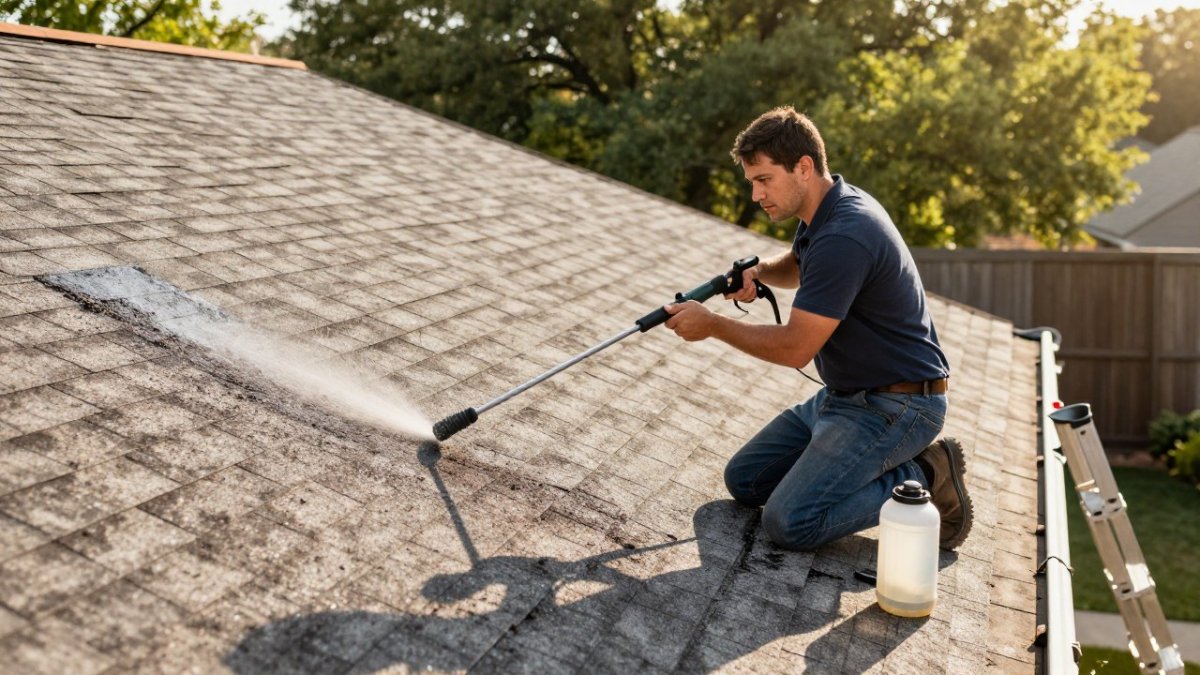
Soft washing is low-pressure application of a cleaning solution. Low pressure matters: pressure washing asphalt shingles can strip granules and may affect manufacturer warranties.
Application follows a predictable sequence:
- Inspect the roof and document existing damage
- Protect landscaping and control runoff
- Apply the cleaning solution at low pressure
- Allow dwell time for the oxidizing agent to work
- Rinse gently and verify stain removal
Watch out: skipping the landscaping protection step can kill plants along the drip line, and runoff carries whatever you sprayed.
Chemical cleaning acts only on the surface. It does not restore flexibility, replace lost granules, or change how long the roof lasts. Cleaning is cosmetic and preventive, not structural.
Rejuvenation: chemistry and shingle compatibility
Rejuvenation addresses the shingle itself. Asphalt shingles rely on oils and binders to stay flexible, and those compounds break down over years of sun exposure.
The key difference from cleaning is the target: biocides kill growth on the surface, while rejuvenation chemistry penetrates the asphalt binder.
Compatibility is the deciding factor. Rejuvenation is generally intended for asphalt shingles in reasonable condition. A roof with widespread granule loss, exposed fiberglass, active leaks, or soft decking is past the point where a surface treatment helps.
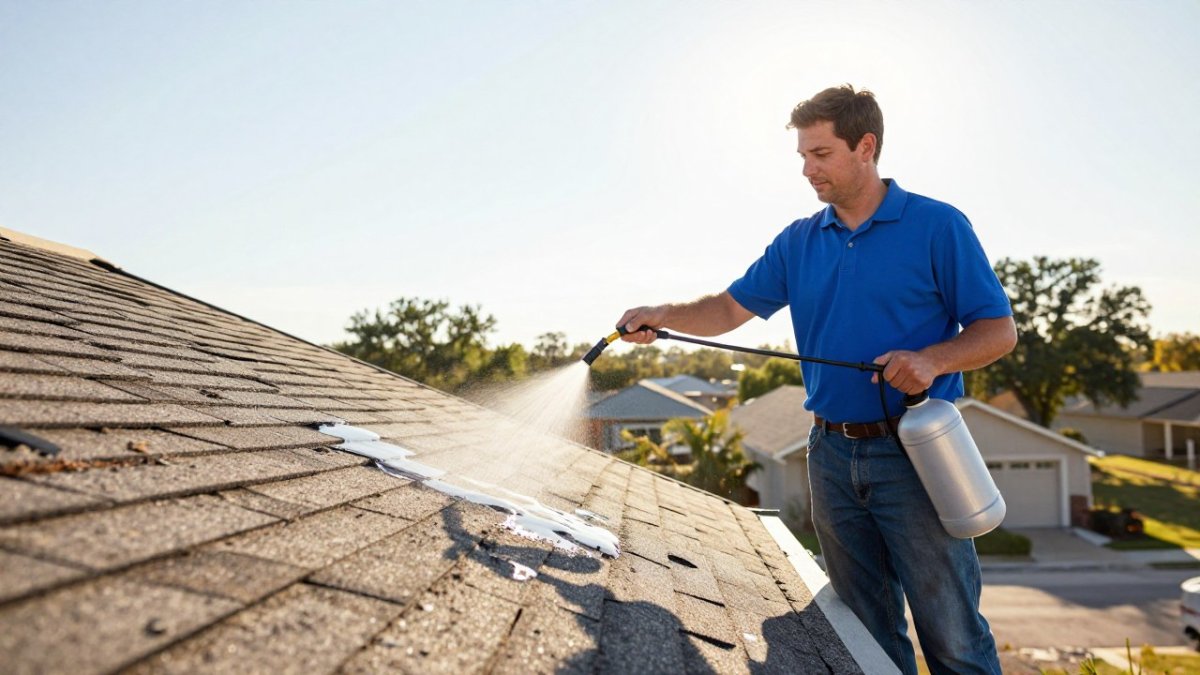
Application is typically a uniform spray across the roof surface, followed by a cure period. There is no scrubbing and no stain removal involved.
Matching the method to the material
- Asphalt shingles, sound condition, organic growth: chemical cleaning or soft washing.
- Asphalt shingles, mid-to-late service life, dry or brittle, minor curling: rejuvenation is a candidate.
- Asphalt shingles, widespread granule loss, exposed mat, leaks: replacement, not treatment.
- Metal roof with organic growth: cleaning only; rejuvenation is not formulated for metal.
- Tile roof with organic growth: cleaning only; rejuvenation is not formulated for tile.
The mistake to avoid is treating the two methods as interchangeable. They solve different problems, and a roof can legitimately need cleaning first and rejuvenation later, or neither if it is already too far gone.
Is Roof Rejuvenation Worth It for a 15- to 20-Year-Old Roof?
Yes, for many roofs in that age range.
The question homeowners actually ask is whether they are saving money or delaying the inevitable. Both can be true. A rejuvenation treatment buys time, and that time has real value when you are planning a budget.
Our honest answer: if the roof is structurally sound and the damage is limited to dryness, dullness, and minor curling, treatment is worth serious consideration.
For a deeper cost and lifespan comparison, see our breakdown of whether roof rejuvenation is worth it.
Roof Maxx Complaints and What They Reveal About the Category
Some complaints about roof rejuvenation appear to trace back to expectation gaps. Homeowners who expected a cleaning were disappointed that stains remained. Others were sold treatment on roofs that were already too far gone.
That is the pattern worth understanding. Complaints in this category often involve providers who skip inspection. A curling, granule-shedding roof needs a different conversation.
If you have read complaints and want a balanced view of whether the claims hold up, our article on whether roof rejuvenation is a scam walks through what the spray can and cannot do.
Asphalt Shingle Rejuvenation Cost and What Drives the Price
Pricing depends on your roof's size, condition, and access. Contact ATX Renewed Roofs or visit its website for current pricing or a quote. Several factors move the number:
- Roof size and pitch. Larger and steeper roofs take more product and more labor.
- Access and safety setup. Complex rooflines add time.
- Roof condition. Heavily deteriorated roofs may be ruled out entirely.
- Number of treatments. Some roofs benefit from a follow-up application years later.
For a side-by-side look at treatment versus replacement, see our cost and lifespan comparison.
| Factor | Chemical Cleaning | Roof Rejuvenation |
|---|---|---|
| Primary purpose | Remove algae, moss, stains | Restore shingle flexibility |
| Best roof age | Any age with growth | Mid-to-late service life |
| Changes appearance | Yes, removes streaks | Yes, restores color |
| Extends lifespan | No | Yes |
| Works on metal/tile | Yes | Asphalt only |
| Typical frequency | Every few years | Occasionally over roof life |
A Decision Framework Based on Roof Condition, Age, and Damage
Start with condition, not with price. The right treatment follows from what the roof actually needs, and the inspection tells you that. A clean roof can still be near the end of its service life, and a streaked roof can have plenty of life left.
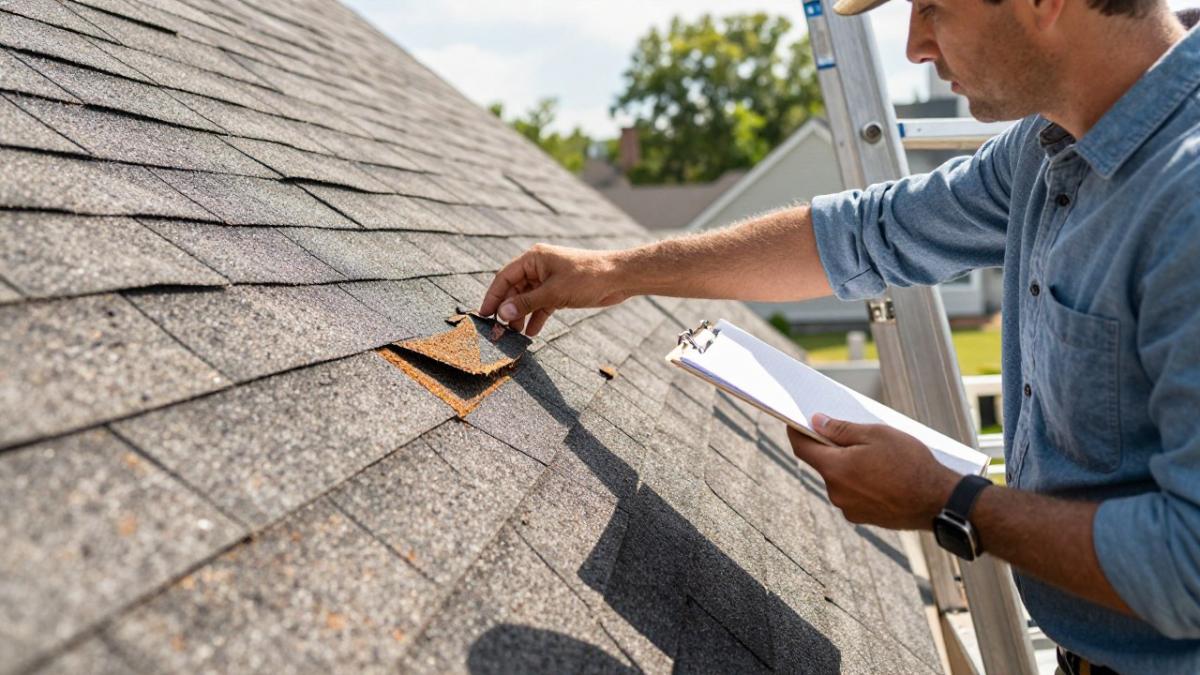
Step 1: Rule out replacement first
Before comparing cleaning and rejuvenation, confirm the roof is still a treatment candidate. Walk the roof or have it inspected for these disqualifiers:
- Widespread granule loss that exposes the asphalt mat or fiberglass backing
- Missing, cracked, or curling shingles across multiple slopes
- Active leaks or water staining in the attic
- Soft or spongy decking underfoot
- Sagging rooflines or damaged flashing
If any of these are present, put the money toward repair or replacement. A surface treatment cannot fix structural failure, and selling one on a failing roof is the pattern behind most complaints about the category.
Step 2: Separate appearance problems from material problems
Once the roof is confirmed sound, classify what you are actually seeing:
- Dark streaks, moss, or algae, with shingles still flat and intact: chemical cleaning or soft washing.
- Dull color, dry or brittle shingles, minor curling, roof roughly 15 to 20 years old: rejuvenation is a strong candidate.
- Both growth and brittleness: cleaning first, then evaluate rejuvenation after the surface is clear.
- Metal or tile roof with organic growth: cleaning only.
Step 3: Compare long-term value, not just upfront price
The upfront price is only part of the decision. Compare total cost of ownership over the remaining roof life:
- Chemical cleaning is typically repeated every few years as growth returns, so the cost recurs.
- Rejuvenation is usually a one-time or occasional treatment over the roof's life, and the value depends on how much service life it actually buys.
- Replacement carries the highest upfront cost but resets the clock entirely.
The honest comparison is cost per year of service life protected, not the sticker price of a single visit. A treatment that buys several years for a fraction of replacement cost can be the better value, while a treatment on a roof that needs replacement is money wasted.
Step 4: Check the paperwork before you buy
Confirm three things before committing: the shingle manufacturer's care guidance, your homeowner's insurance policy, and the provider's warranty terms. Pressure washing is widely discouraged by manufacturers because it damages granules, and following manufacturer guidance protects any remaining material warranty. Insurance rarely covers cosmetic cleaning or preventive treatment, and provider warranties vary widely in what they cover and exclude. Because cleaning methods can affect both shingle condition and warranty coverage, weigh the risks of soft washing against pressure washing before choosing an approach, as JetSet Power Washing explains.
A common mistake is treating appearance as the whole story. Use condition first, then value, then paperwork, and the right choice usually becomes obvious.
Warranty, Insurance, and Manufacturer Guidance to Check First
Check three documents before you buy any treatment: your shingle manufacturer's care guidance, your homeowner's insurance policy, and the provider's warranty terms.
Manufacturers publish cleaning and maintenance recommendations, and some specify approved methods. Pressure washing is widely discouraged because it damages granules. Following manufacturer guidance protects any remaining material warranty you have.
Insurance coverage for cosmetic cleaning or preventive treatment varies, so check your policy.
Provider warranties vary widely in what they cover and exclude. Read the terms before you pay, and confirm what happens if results fall short. Our guide to roof rejuvenation warranty and guarantee coverage explains what to verify.
Get a Free Roof Assessment Before You Choose a Treatment
The only reliable way to choose between cleaning, rejuvenation, and replacement is a professional roof inspection. Guessing from the ground leads to the wrong purchase.
At ATX Renewed Roofs, we start every conversation with an honest assessment. ATX Renewed Roofs uses a plant-based, eco-friendly rejuvenation spray for shingled roofs. Its service is transparent and no-pressure.
Request your free estimate and get a straight answer about what your roof actually needs. Learn how to get a free roof assessment and schedule yours.
Your roof is either a candidate for treatment or it is not, and you deserve to know which before spending a dollar.
Frequently Asked Questions
Does roof rejuvenation spray really work, or is it just a temporary fix?
Rejuvenation is a treatment intended to restore flexibility to aging asphalt shingles. Results depend on how much granule loss and curling the roof already has. Roofs with exposed fiberglass mat or active leaks generally need repair or replacement rather than a surface treatment.
What is the difference between roof rejuvenation and chemical cleaning?
Chemical cleaning removes what is sitting on the roof, such as algae streaks, moss, lichen, and dirt. Rejuvenation does not clean; it is intended to address the shingle itself. Cleaning improves appearance. Rejuvenation targets flexibility and weather resistance.
Is roof rejuvenation worth it compared with a full replacement?
It depends on roof age and condition, so a professional inspection is the most reliable way to decide. Roofs with widespread curling or that have already leaked into the decking generally point toward replacement. Request your free estimate from ATX Renewed Roofs to learn which applies to your roof.